Bedding · Practical Guide
Choosing a Waterproof Mattress Pad Without Sacrificing Comfort
A mattress protector has an unglamorous assignment: stand between a mattress and the ordinary surprises of life. The best one does so without announcing itself in the night—no crackling, clammy heat, or stubborn corners creeping loose beneath the sheet.
Waterproof bedding is not a single material or a guarantee of a particular feel. Its comfort depends on the fabric against the body, the construction of the cushioning, the design of the barrier, and the way the whole pad fits and washes. A little attention to those details can make protection feel less like an extra layer and more like a quiet part of the bed.
First, decide what kind of protection you need
People often use “mattress pad” and “mattress protector” as if they were interchangeable. They overlap, but the terms can describe different priorities. A pad commonly adds cushioning or changes the surface feel; a protector is principally intended to shield the mattress from moisture, stains, and everyday wear. Some products combine the two, with quilted padding above a waterproof layer. Others are relatively thin and focus on coverage with little added loft.
Before comparing fabrics or labels, consider the household’s actual needs. A bed used by young children, someone managing incontinence, or a pet that occasionally climbs aboard may call for dependable liquid protection. In another room, the goal may be modest defense against perspiration, spills, or accidental stains. Matching the construction to the likely exposure helps avoid buying a bulky or heavily engineered layer when a lighter one would do.
It is also useful to distinguish water resistance from waterproof protection. Product descriptions may use these terms differently, so look for clear information about the barrier and its intended function. If the manufacturer does not explain what makes the pad protective, what areas it covers, or how it should be cleaned, the label alone cannot answer those questions.
The fabric is the part you feel
Once a fitted sheet is in place, the waterproof layer is usually hidden. The cover fabric, however, can still influence the surface’s softness, texture, and sense of temperature. Cotton terry has a gently looped texture and can feel absorbent; a smoother cotton fabric has a flatter hand. Polyester and microfiber may be chosen for durability or ease of care, though their feel varies substantially with weave and finish. Fiber names offer clues, not a complete forecast.
Think about what you notice on your current bed. If you prefer a smooth, cool-feeling sheet, a thick or highly textured pad may be more apparent beneath it. If you like a cushioned surface, a quilted top may be welcome. People who are sensitive to seams or unevenness may prefer a simpler, flatter construction. These are personal judgments: there is no fabric that feels identical to every sleeper or performs the same way in every bedroom.
Breathability is another consideration, though it is often described imprecisely. A cover that feels airy does not necessarily mean that the complete pad will release heat or moisture in the same way. The fill, quilting, backing, and mattress beneath it all contribute to the finished surface. A waterproof barrier can limit the movement of liquid through the pad; depending on its materials and construction, it can also affect airflow and the sensation of warmth. Look for a product description that addresses the complete design rather than making broad promises based on one fabric layer.
When possible, assess the pad in context. A cover’s hand in a showroom or in product specifications may not predict how it will feel under your own fitted sheet. Sheet weave, mattress firmness, room temperature, and personal sensitivity all matter. For a hot sleeper, a thin construction and breathable top fabric may be preferable to a lofty, heavily quilted pad. For someone who wants a softer landing, a little padding may be worth the trade-off.
Understand the waterproof layer
The barrier is the defining feature of a waterproof mattress pad, but it does not need to be loud or conspicuous. Noise is more likely to become a complaint when a backing feels stiff, crinkles as it moves, or sits loosely against the mattress. A flexible construction, a well-fitted pad, and a fabric layer above the barrier can all contribute to a quieter experience. Still, “noiseless” is a subjective claim. If sound is a particular concern, reviews and a return policy may be more useful than an adjective on a package.
Some protectors use a thin, flexible membrane laminated or bonded beneath the cover. Others incorporate a waterproof finish or layer within a more complex textile construction. The precise technology matters less to many buyers than the practical questions: Does the manufacturer specify the protective function? Is the barrier intended to cover the sleep surface and sides? Can the item be washed at home? Are there restrictions on temperature, detergent, or drying?
Do not assume that greater thickness means greater protection. A thick pad may add plushness, but the barrier’s design and coverage are what matter for keeping liquid from reaching the mattress. Conversely, a very thin protector may provide protection while adding little cushioning. Decide whether you want one product to do both jobs, and examine how convincingly it addresses each.
It is worth keeping expectations measured. A waterproof layer is not a substitute for prompt attention to spills or careful care according to the label. Nor does a protector make every mattress indestructible. Its purpose is to provide an additional defense, helping reduce the chance that routine moisture or an accident reaches the mattress directly.
Quilting changes the feel—and the profile
Quilting can hold fill in place and create a more padded, even surface. The pattern may be channel-shaped, diamond-shaped, or divided into small sections, each affecting how the fill is distributed and how the top feels. A lightly quilted design typically changes the mattress less than a lofty pad with substantial fill. If the mattress already has a plush top, extra loft may be unnecessary; on a firm surface, it may provide a modest softness without replacing the mattress itself.
Padding should be understood as surface cushioning, not a cure for a mattress that has lost support. A mattress pad can soften the initial feel, but it cannot reliably repair sagging, uneven support, or a structural problem. If the bed is uncomfortable because it dips or has developed pronounced lumps, adding layers may disguise the issue briefly while making the sleep surface less stable.
Quilted construction also affects fit. A pad with substantial fill can take up more room at the edges and may be harder to tuck beneath a fitted sheet, especially on a tall mattress. The more layers already on the bed—a topper, a protector, and deep-pocket sheets, for instance—the more important it becomes to check the total height. A beautifully soft pad is of limited use if it gathers or pulls the sheet loose overnight.
Measure the mattress, not just the bed size
A queen-size label tells you the approximate surface dimensions, but not how deep the mattress is or how much it rises once a topper has been added. Pocket depth describes the portion of a fitted-style pad designed to wrap around the mattress. Measure from the mattress’s bottom edge up and over its top to estimate the material needed to cover it securely, accounting for any topper or other layer that will remain in place.
Manufacturers may state a maximum mattress depth, a pocket measurement, or both. Read the wording carefully. A stretchy knit skirt can accommodate some variation, while a fixed-depth design may have less give. If the pad is too shallow, it may pull away from the corners. If it is much too loose, it can bunch beneath the sheet. Either problem can create an irritation that no fabric specification can redeem.
Secure elastic around the edges or corners can help keep a protector in place. Check whether the design wraps around the mattress like a fitted sheet or uses corner straps. A fitted skirt offers broad coverage along the sides; corner bands may be easier to position but cover less of the mattress perimeter. Neither is universally right. The mattress height, how often the bedding is changed, and how much shifting occurs during sleep all influence what will be most convenient.
One useful final check is the complete bed, assembled as it will be used: mattress, any topper, waterproof pad, and fitted sheet. The fitted sheet should still have enough depth to stay in place without being stretched to its limit. If it barely grips the corners before the pad is added, a thicker protector may make the fit worse.
Choose a care routine you can keep
A waterproof mattress pad earns its place through repeated use, so laundering instructions are not a minor detail. Some products are machine washable; others require a specific cycle, lower temperatures, or a particular drying method. Certain materials may need to be line-dried or dry-cleaned. Check the care label before buying, especially if the pad will need frequent washing.
Heat can be an important constraint. A care label may direct you to use a cool or gentle wash and low-heat drying—or to avoid a dryer altogether. High heat can damage some waterproof backings or reduce their effectiveness, depending on the construction. Do not assume that a product can tolerate a hot wash simply because its outer fabric seems durable. The manufacturer’s instructions apply to the whole pad, including the barrier.
Capacity matters, too. A large, quilted protector may be difficult to wash or dry in a small household machine. If the item does not move freely in the washer, it may not clean or rinse as intended. A simpler pad may be easier to manage when regular laundering is part of the plan. In any case, follow the specific instructions rather than relying on a generic bedding routine.
Frequency depends on use and household needs. A protector does not require constant washing simply because it is on the bed. Clean it when soiled and follow the manufacturer’s guidance. Keeping an extra fitted sheet or protector available can make changes less hurried, particularly in a home where spills are more likely.
A practical comparison checklist
When two protectors look similar, a short list of concrete questions can make the choice clearer. Compare the answers rather than trying to decode every marketing phrase.
- What is the main purpose? Is the product designed chiefly for waterproof mattress protection, added cushioning, or a combination?
- What touches the sheet? Identify the cover fabric and consider whether its texture suits your preferences.
- What is inside? Note the fill, if any, and whether the quilting may noticeably change the mattress feel.
- How is the barrier described? Look for clear information about waterproof function and coverage rather than relying on vague wording.
- How deep is the mattress? Include any topper in your measurement and confirm the stated pocket or maximum depth.
- How does it stay put? Check the skirt, elastic, or corner-strap design and consider how it will work with your mattress.
- Can you care for it easily? Confirm wash temperature, cycle, detergent restrictions, and drying instructions.
- Will your sheet still fit? Consider the combined height of the mattress and every layer beneath the fitted sheet.
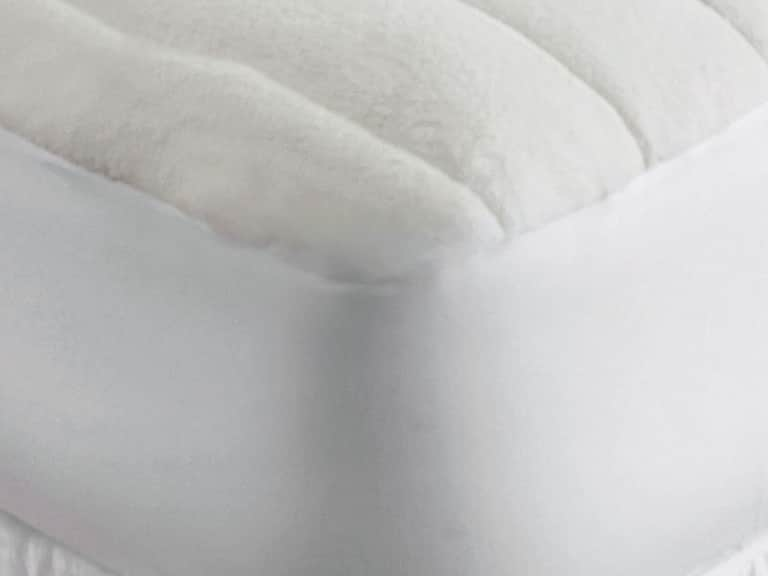
For a straightforward, cushioned option, the DownTown Company Comfort Quilted Mattress Pad is described as having a channel-quilted design, a 50% cotton and 50% polyester fill, a terry microfiber top, and an 18-inch jersey-knit skirt. It is machine washable. Those details may be useful when comparing softness, fit, and care, but they do not identify it as a waterproof pad. If waterproof protection is essential, confirm that a product explicitly provides it rather than treating cushioning or absorbency as a substitute for a barrier.
Common trade-offs, without the sales pitch
A thinner protector may be less noticeable and easier to fit, but it will add little cushioning. A quilted pad may feel more inviting while increasing the bed’s profile. A smooth cover may suit sleepers who dislike texture, whereas a terry surface may feel more substantial and absorbent. A deeper skirt can accommodate a taller mattress, but the finished fit still depends on the actual dimensions and elasticity.
Price alone does not settle these questions. A more expensive pad may offer a different fabric, construction, or finish, but a high price does not guarantee a quieter feel or a more suitable fit. Likewise, an inexpensive item can be perfectly adequate if its barrier, dimensions, and care instructions meet the household’s needs. Focus on the evidence in the specifications and on the features that matter in daily use.
Claims about breathability, temperature control, or allergy benefits deserve the same calm scrutiny. A product’s materials may help explain its feel, but individual comfort varies, and broad claims are not a substitute for clear construction details. If someone has a specific sensitivity or medical concern, product descriptions alone may not answer it; consider the exact materials and seek appropriate professional guidance where needed.
A careful installation makes a difference
Before placing a new waterproof pad, make sure the mattress is dry and clean. Follow any setup instructions, then position the pad with its protective surface oriented as directed. Smooth it across the mattress and secure its corners or skirt without forcing the fabric. Add the fitted sheet and check that the pad has not shifted or created a ridge.
After the first night, take a moment to notice what changed. Does the bed feel warmer? Is the surface noisier than expected? Has the pad crept toward the center or pulled at a corner? A small fit adjustment may solve a minor annoyance. If the pad consistently bunches or changes the feel in a way you dislike, the mattress depth, construction, or return window may deserve a second look.
When a spill occurs, remove bedding promptly and follow the manufacturer’s cleaning instructions. Avoid improvised treatments that could harm a membrane or coating. Let the pad dry fully before returning it to the mattress, unless the care instructions say otherwise. The modest ritual of drying and refitting matters: damp bedding can become uncomfortable and may undermine the purpose of keeping the sleep surface fresh.
The comfortable choice is the one that disappears
A good waterproof mattress pad does not need to transform the bed. It needs to protect the mattress while allowing the familiar qualities of the sleep surface to remain. For one person, that means a nearly imperceptible barrier. For another, it means a soft quilted layer with enough depth to make a firm mattress feel gentler. The right balance depends on the bedroom, the mattress, and the practical demands of the household.
Begin with the protection required, then work outward: cover fabric, quilting, barrier, fit, and care. Measure the mattress with its topper, account for the fitted sheet, and read the laundering instructions before deciding. When those details align, protection can be reliable without dominating the bed. It becomes what it ought to be: useful, unobtrusive, and absent from the mind by the time the lights go out.
At a glance
- Choose a product that clearly states it provides waterproof protection if a liquid barrier is essential.
- Compare the cover fabric, fill, quilting, and backing together; each can influence feel and warmth.
- Measure mattress depth with any topper in place, and check pocket depth and fitted-sheet compatibility.
- Follow the exact washing and drying instructions to help preserve the pad’s construction.
- Separate cushioning from protection: a soft or absorbent pad is not necessarily waterproof.